
Baby's First Year on the Rails
What eight months of sustainable travel with an infant has actually looked like, and what we'd tell other parents
We haven’t flown anywhere in five years, which sounds like a sacrifice until you realize how much of what people actually want out of flying somewhere far away is really just the feeling of otherness, of being somewhere that doesn’t sound or smell or taste like home. We still wanted that feeling. We just wanted to get to it without a boarding pass. Quebec City turned out to be exactly that: our exotic French getaway, without the flight. The only rule we gave ourselves was that we had to get there entirely by train, Madison to Detroit to Montreal to Quebec, one continuous rail line strung together out of a handful of connections. It turned into a much bigger adventure than we expected, daring border crossing included, and by the time we got home we’d forgotten to miss the plane at all.
Sometimes we wonder if the gods are actually laughing at us. We got into Detroit the day before the Grand Prix, which we did not plan for and did not see coming until we were already there. The city had entirely blocked off a huge circle of downtown streets to build the race track overnight, and the concrete barriers didn’t care that we had a train to catch. They cut off access to both the tunnel to Canada and the train station we needed, and for a while it genuinely looked like our whole itinerary was about to fall apart on day one.
We wandered the perimeter of that barricade for what felt like a very long time, retracing our steps, trying side streets that dead ended into more concrete, starting to do the math on what missing our connection would actually cost us. Eventually we found a hotel with a skywalk that happened to cross over the blocked off tracks, and we ducked inside, half expecting to get stopped by security, and followed it across. It let out, of all places, directly into a car museum. We walked past a room full of gleaming vintage automobiles to make our train, which felt like such an absurd, on the nose bit of irony that we couldn’t even be mad about it anymore. We just started laughing.
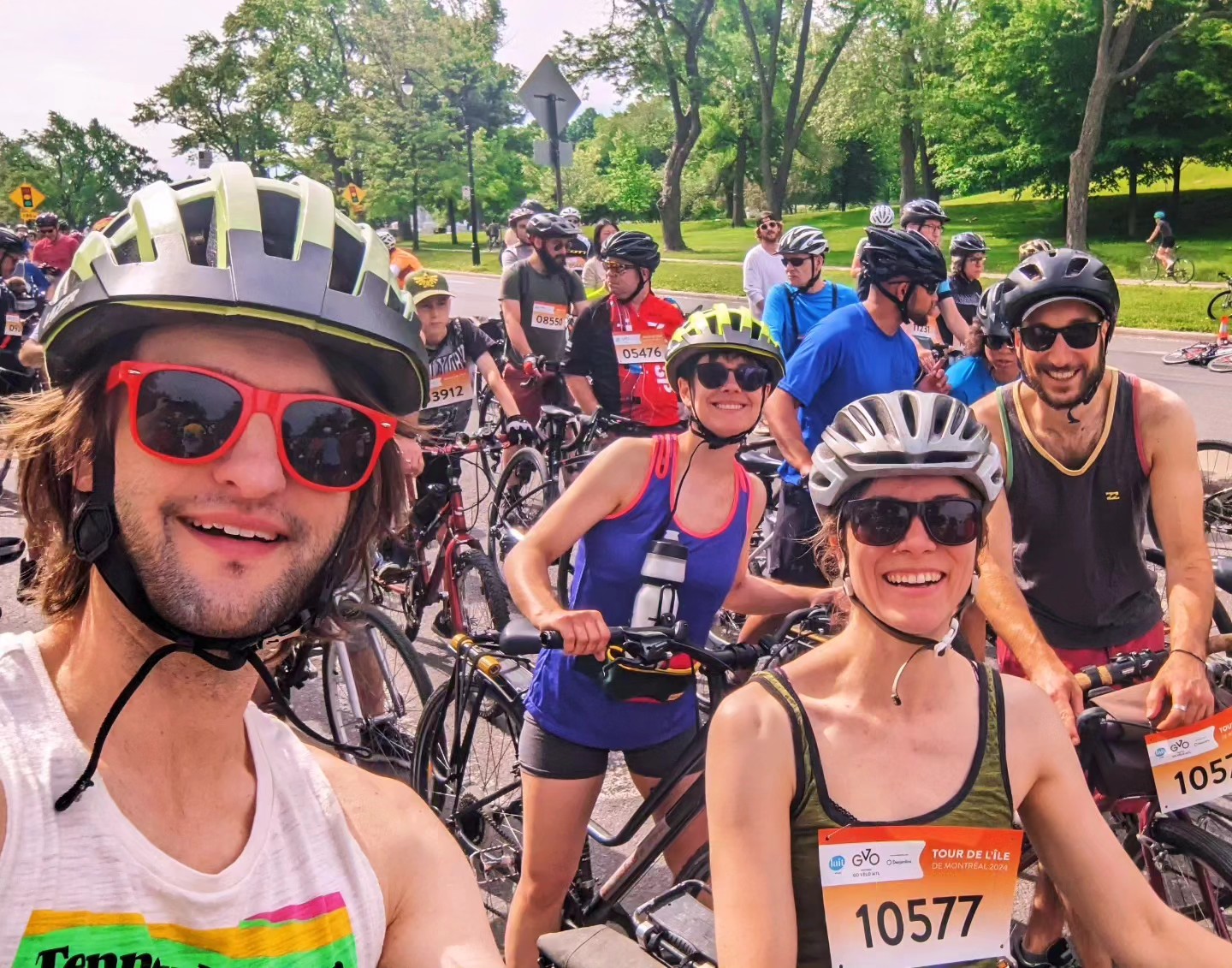
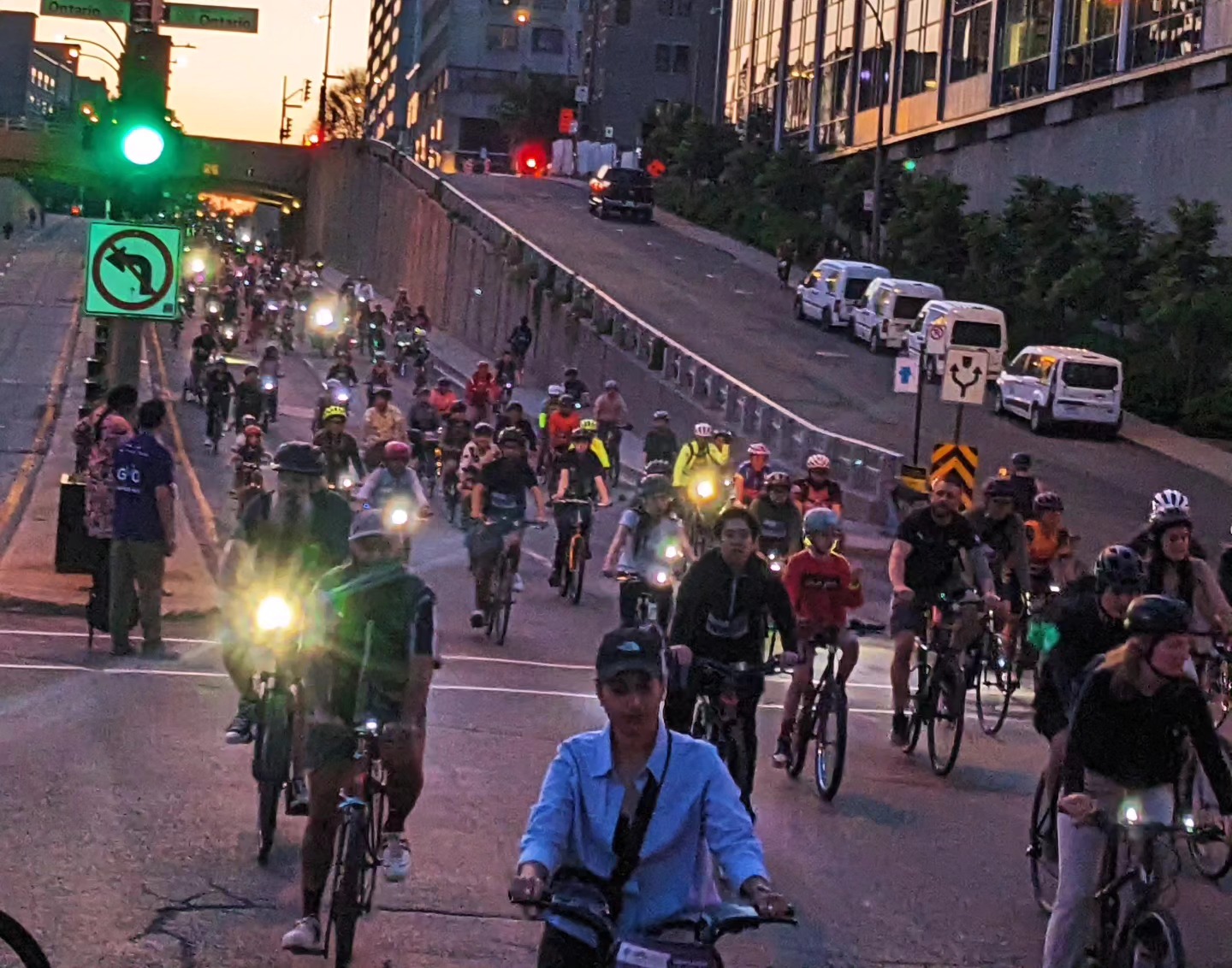
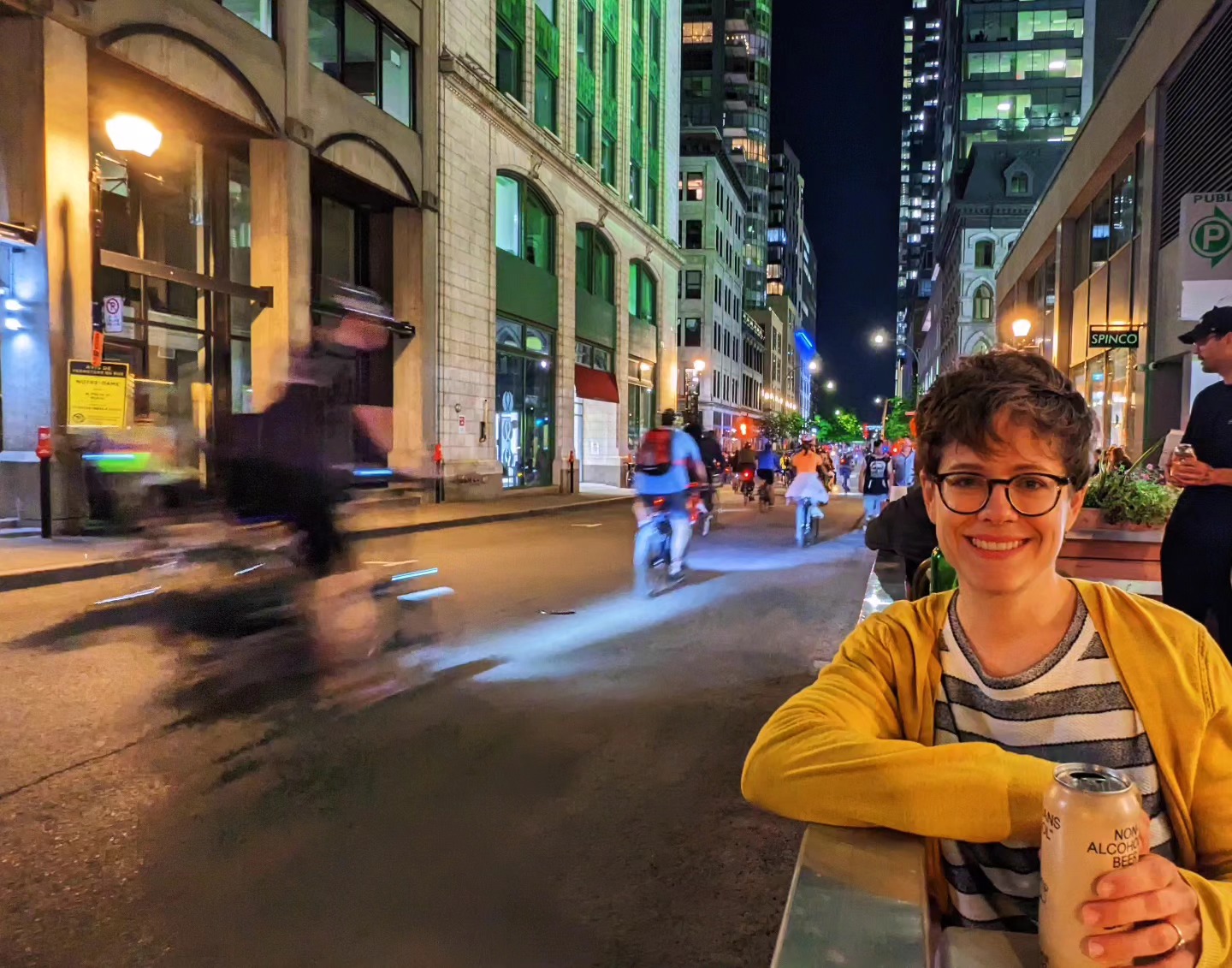
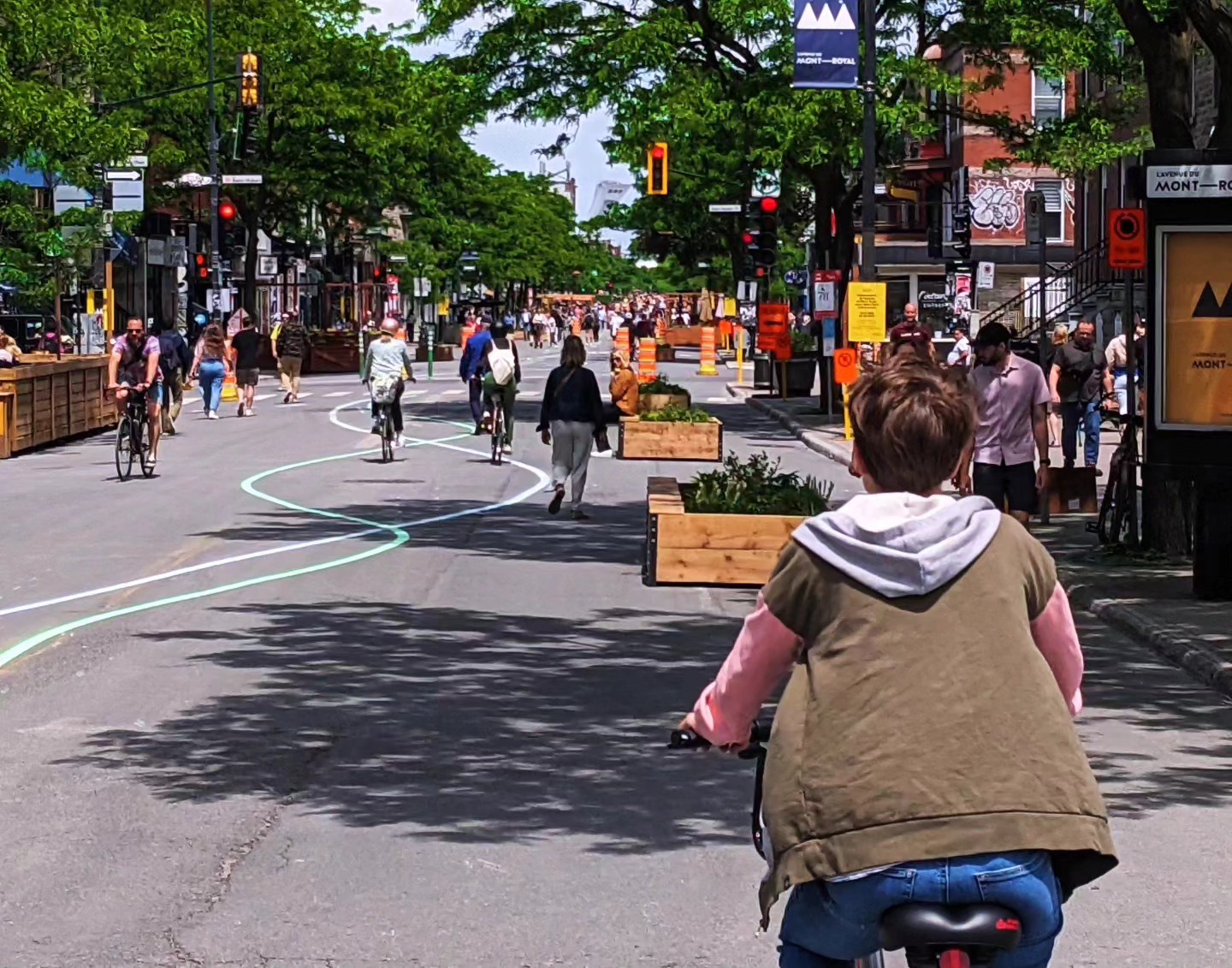
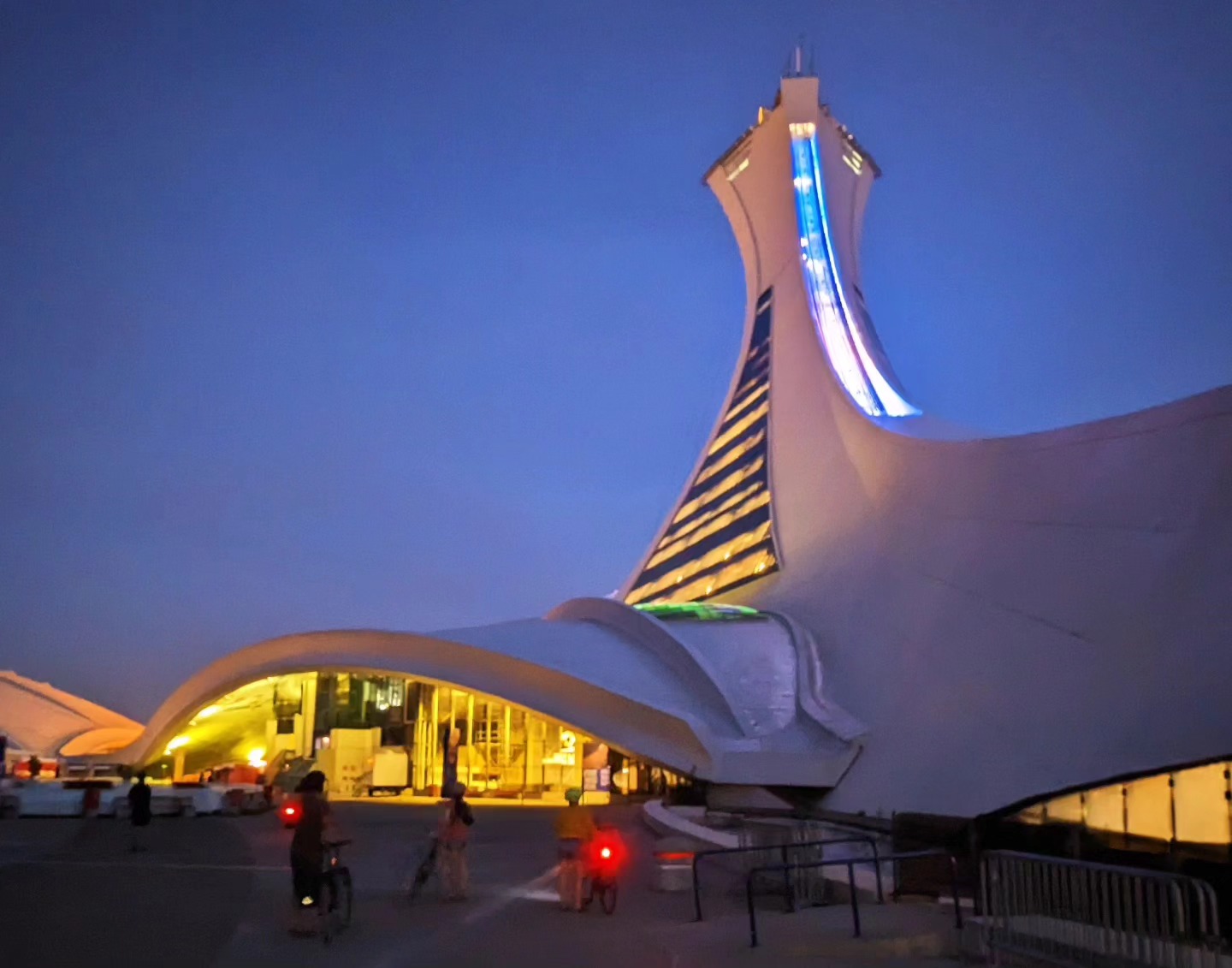
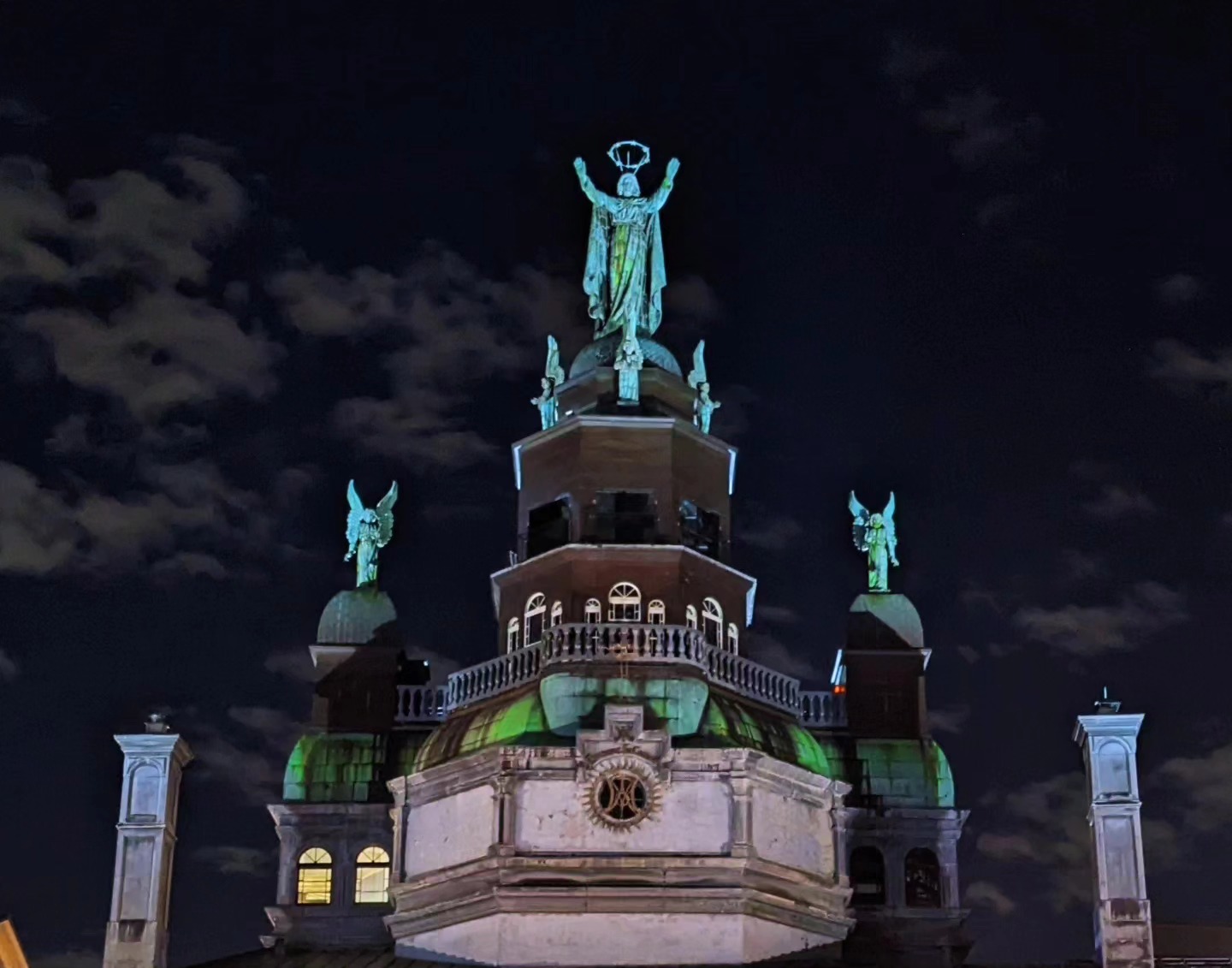
Montreal, c’est incroyable! We came for the Tour de l’Île bike tour and stayed with the loveliest host family for our three day visit, the kind of hosts who don’t just hand you a key and disappear. They rode around with us themselves, showing us their city instead of just describing it, and the food alone would have been worth the trip: proper French pastry, poutine done right, meals that stretched on far longer than we planned because nobody wanted to be the one to suggest leaving the table. One night they took us out to Parc Olympique after dark, and it was genuinely one of our favorite moments of the whole trip. The Olympic Tower leans at a wild 45 degree angle, the tallest inclined structure in the world, lit up against the night sky over the old 1976 Olympic Stadium, and standing underneath it felt like standing under something built for a different, more optimistic decade. We don’t often do city-only trips without some kind of outdoor component attached, but Montreal delivered everything we actually wanted out of a taste of Europe anyway: real transit that runs when it says it will, cycling infrastructure that treats bikes like actual transportation instead of an afterthought, hosts who treated hanging out with two strangers on bikes as a fun way to spend an evening, and an accent we could have listened to for another month. We’re already hoping we get an excuse to come back.
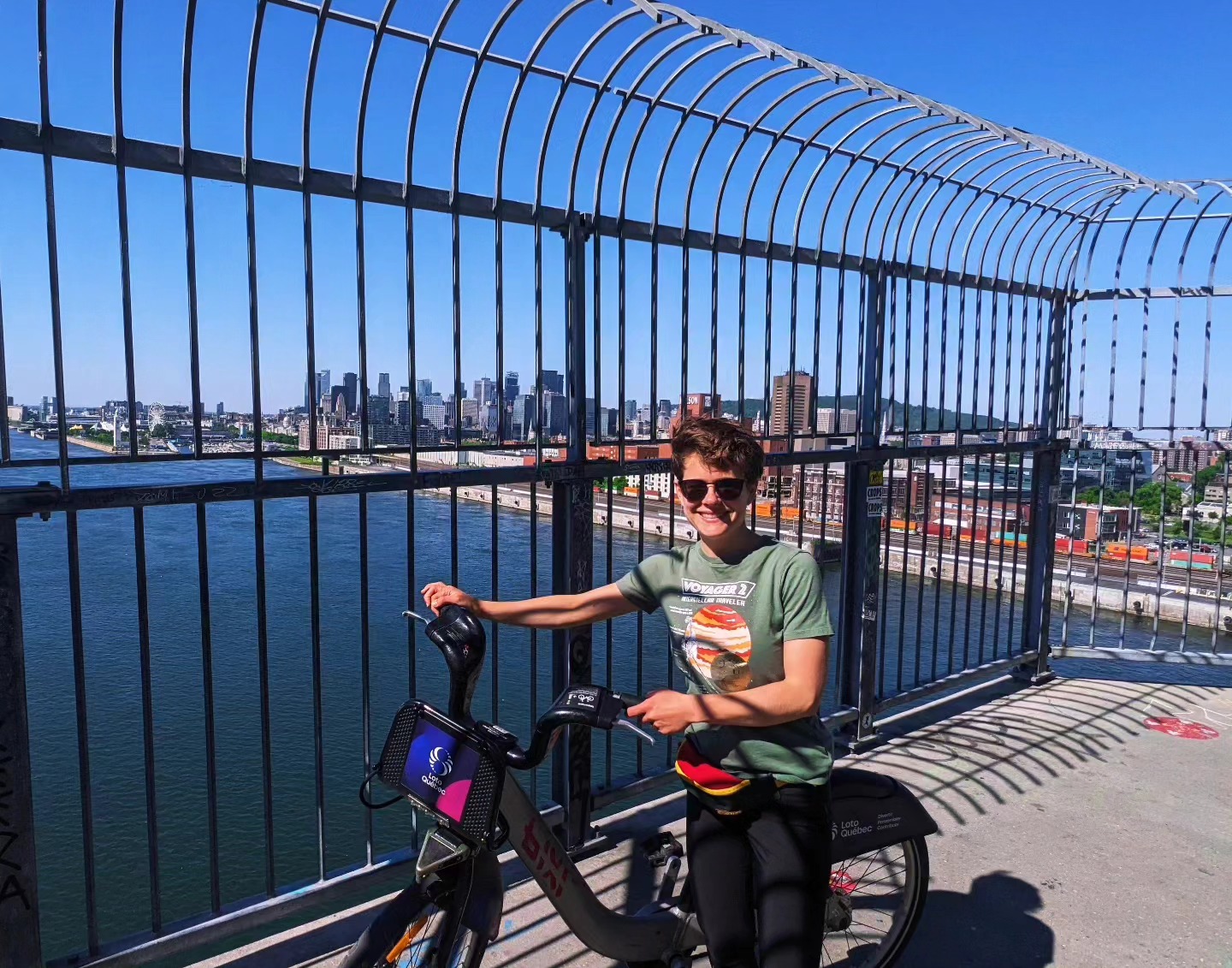
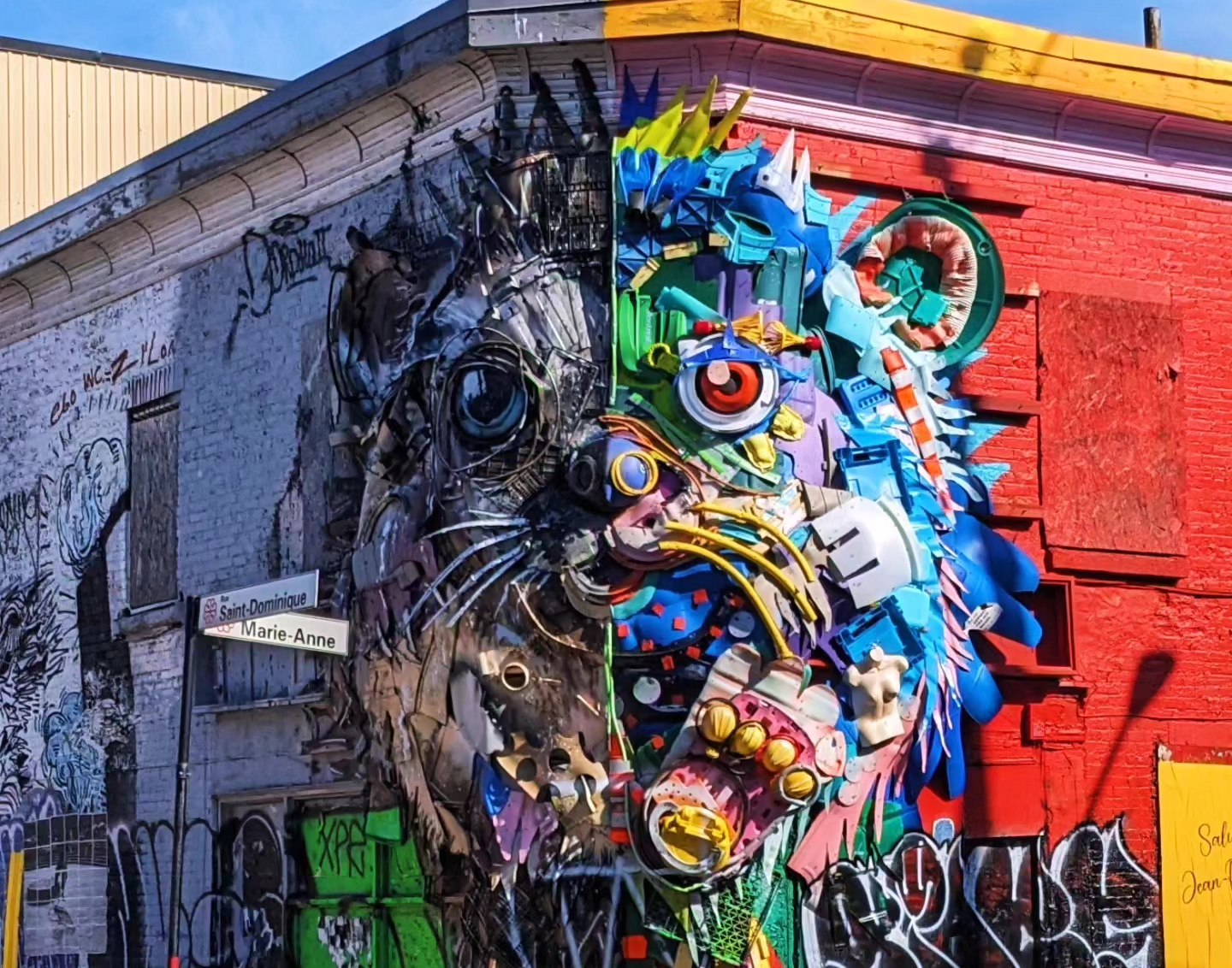
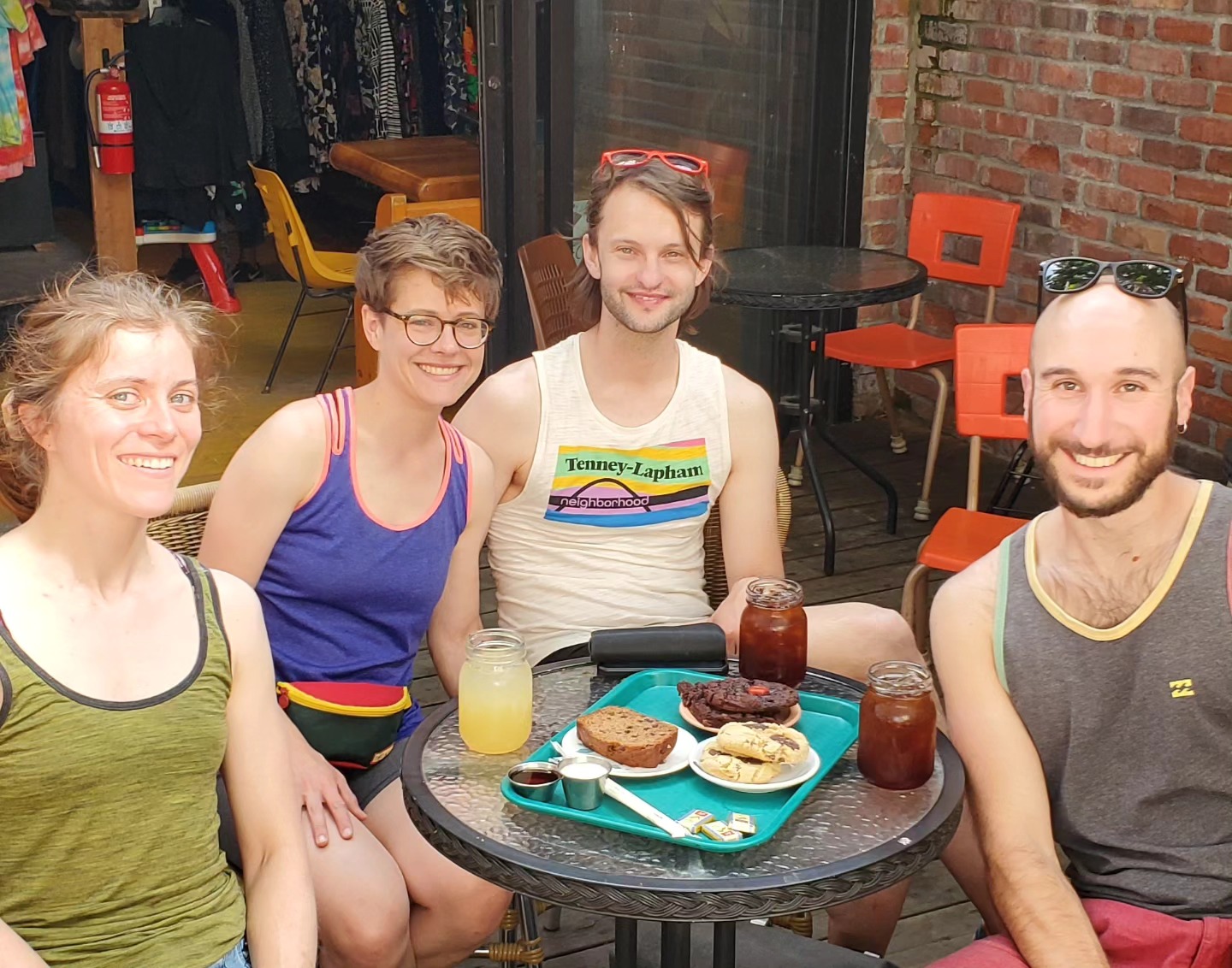
Quebec City delivered on the whole reason we came in the first place. The food was fantastic in that specific way that makes you eat more than you planned to at every single meal, and the old town streets are exactly the kind of charming, cobblestoned, patisserie on every corner French streets we were hoping for when we first started plotting this trip. We genuinely couldn’t tell you what we’d have been missing by actually flying all the way to France instead. Every argument our brains tried to make for why the real thing would have been better kept running into the same wall: we were standing right there, eating a croissant, listening to French on the street, and none of it required a single gallon of jet fuel.
We took a walking tour through the old city that turned out to be as much a history lesson as a stroll, and it completely changed how we saw the place for the rest of the trip. Quebec City is a genuine fortress, the only city north of Mexico in North America that still has its original defensive walls intact, more than four kilometers of them ringing Old Quebec, anchored by the Citadelle sitting up on Cape Diamond as the largest British fortification left on the continent. The walk traced the whole reason those walls exist in the first place: the Battle of the Plains of Abraham in 1759, a short, brutal fight just outside the walls where British forces under General Wolfe defeated the French under the Marquis de Montcalm. Both commanders died from wounds they took in the fighting, and within days the city had surrendered, ending French colonial control and reshaping the next few centuries of North American history in about twenty minutes of combat. Walking the actual battlefield, now a quiet park, with all of that context freshly in our heads, was easily one of the most memorable parts of the whole trip.
Right in the middle of all that history sits the Château Frontenac, the hotel that shows up in basically every photo of the Quebec City skyline, and it turns out to have its own great story. The Canadian Pacific Railway built it starting in 1892, opening it the following year as a prestige hotel meant to give the city a landmark worthy of the view, in a style called Châteauesque that borrows heavily from the grand manor houses of France’s Loire Valley. It’s named after Louis de Buade de Frontenac, the colonial governor who successfully defended Quebec against British and Iroquois attacks a century before Wolfe finally succeeded. The building grew in stages over the next hundred years, culminating in the central tower that gives it that unmistakable silhouette, and it’s often called the most photographed hotel in the world. We didn’t stay there, it’s a bit outside a train trip budget, but we walked past it more times than we could count and never got tired of looking up at it.
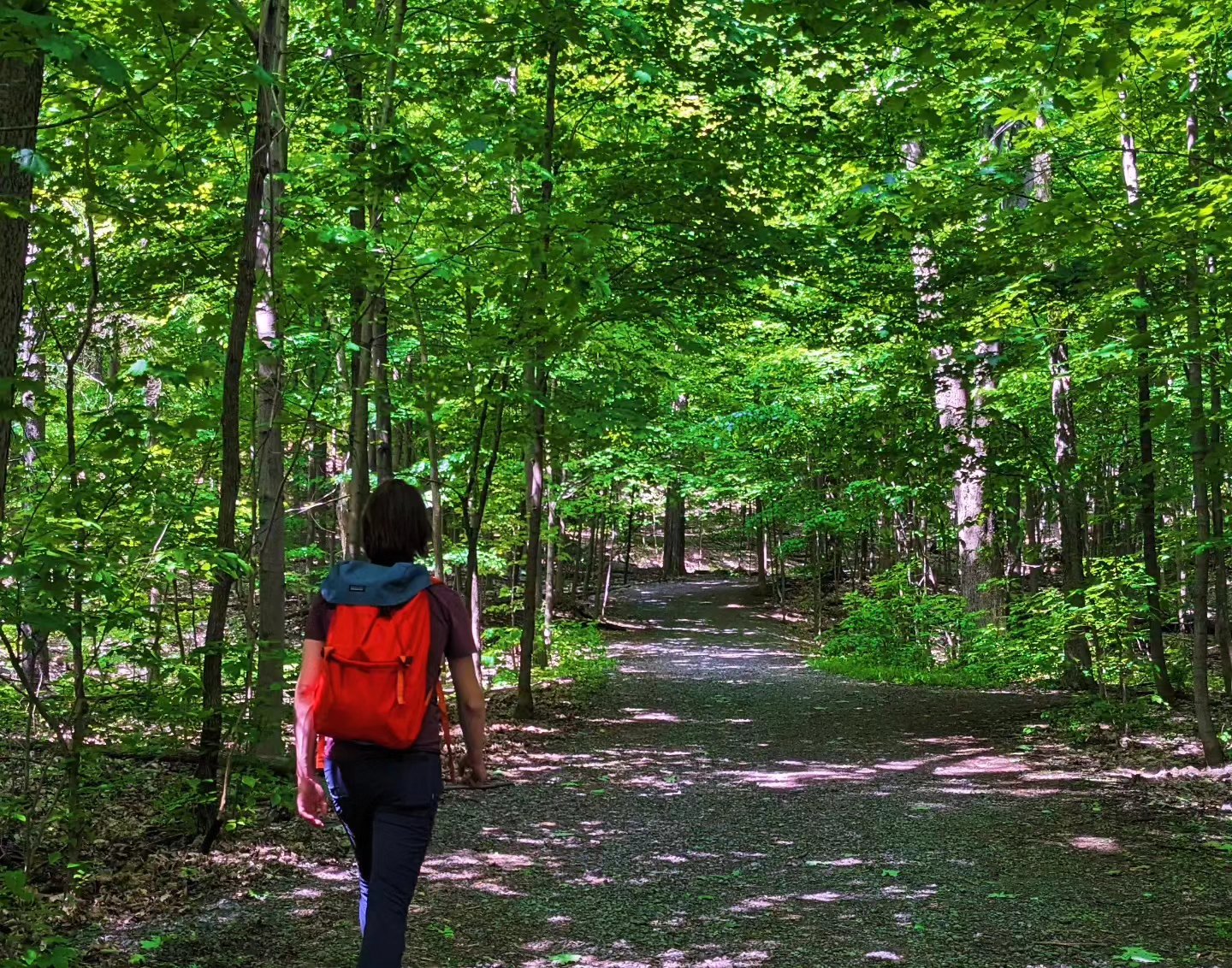
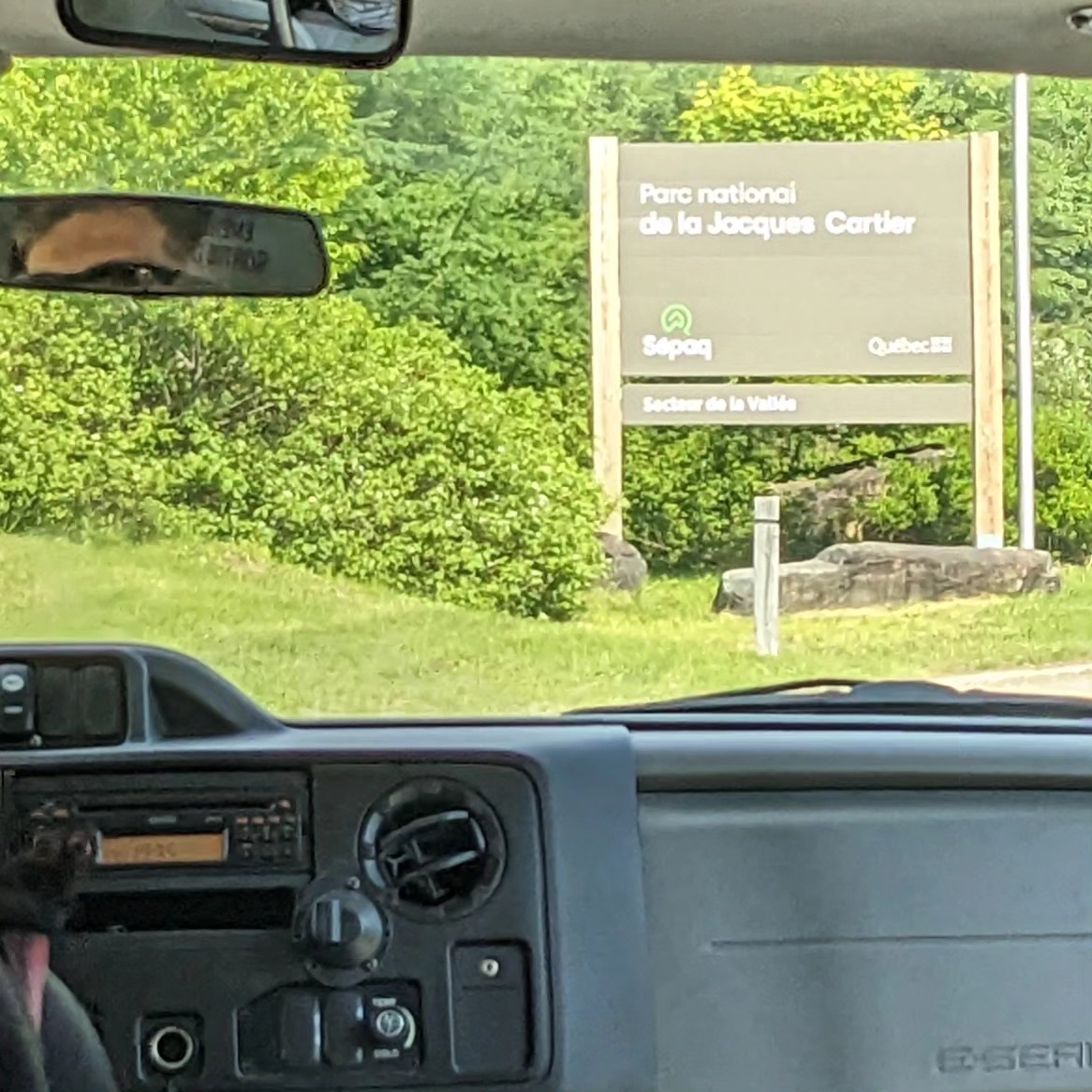
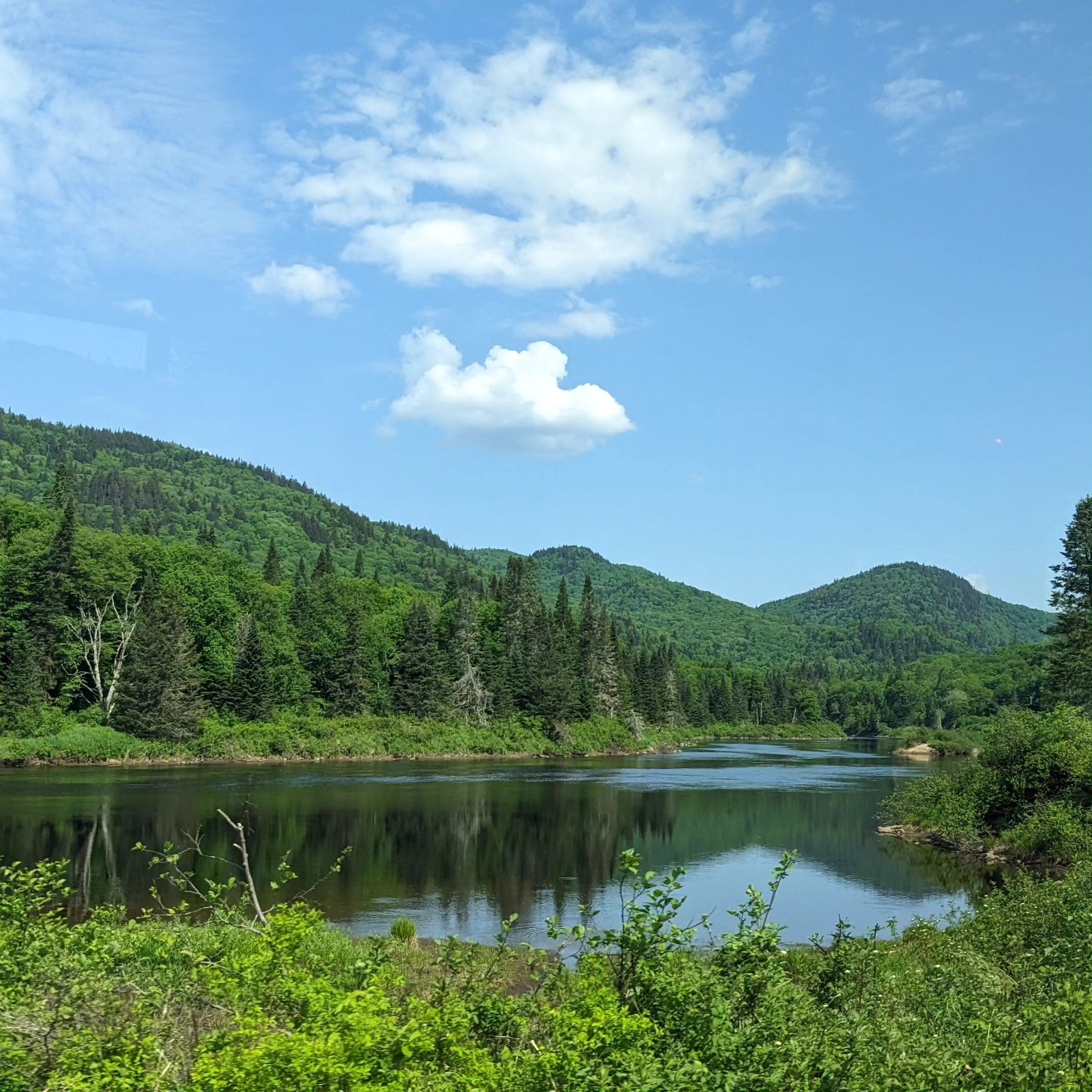
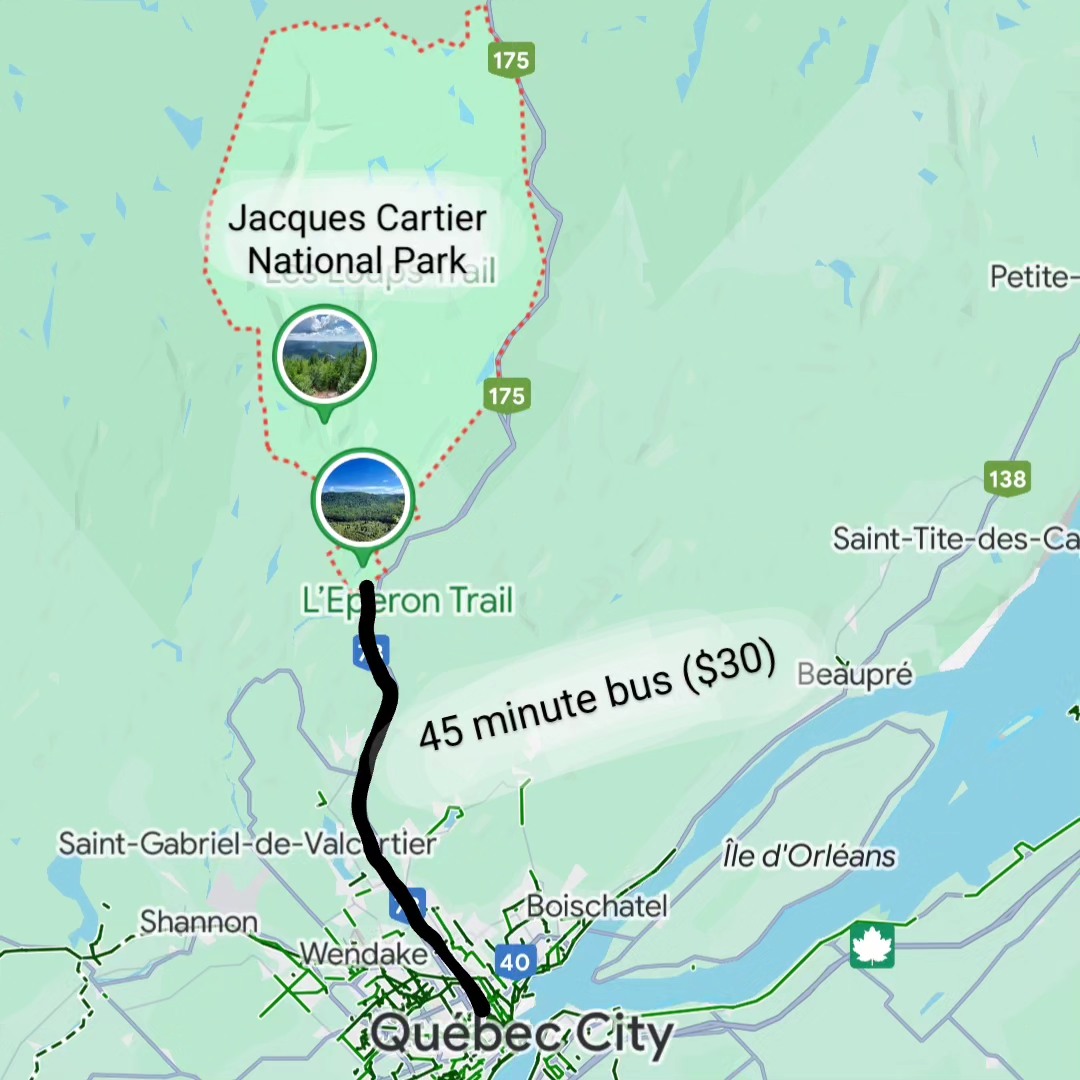
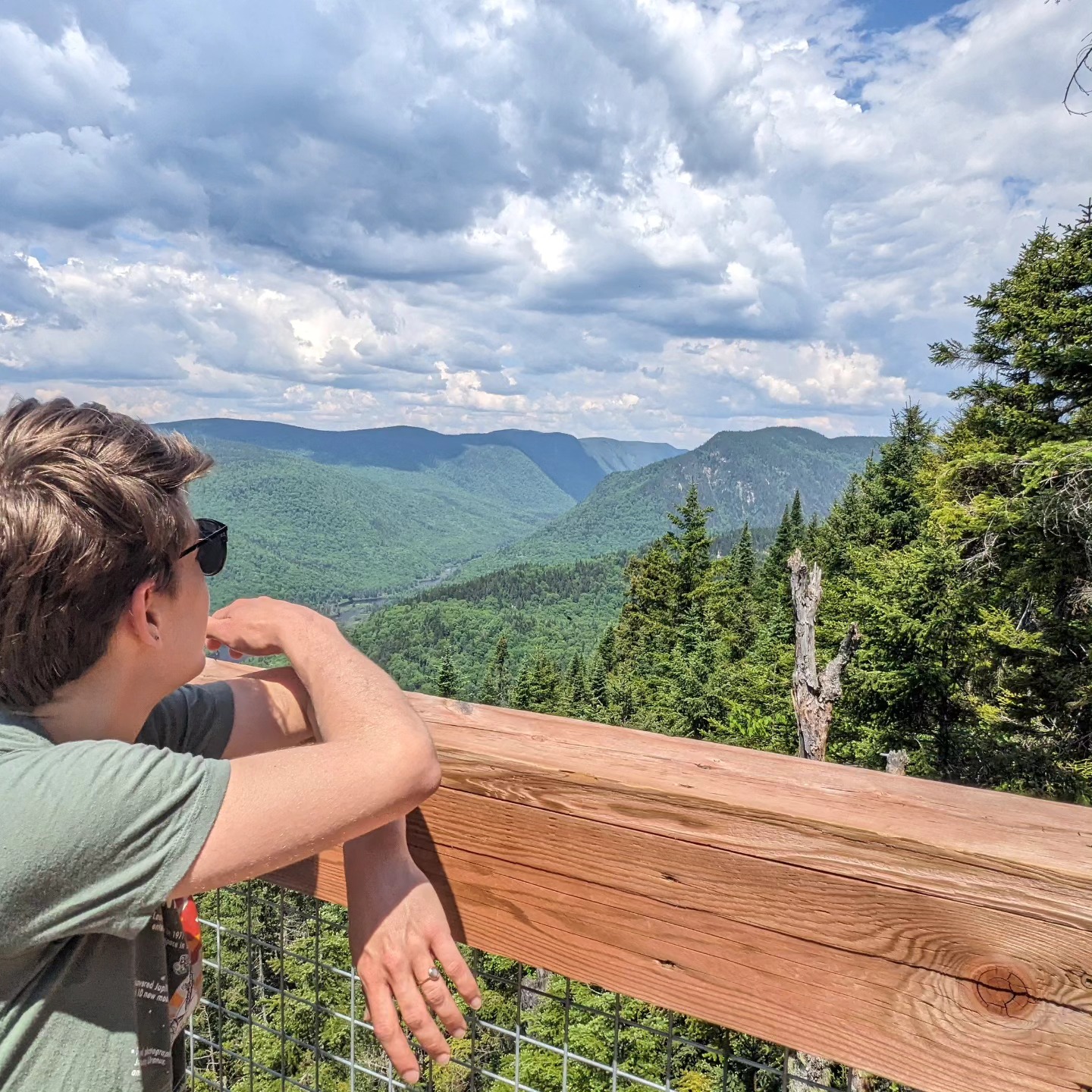
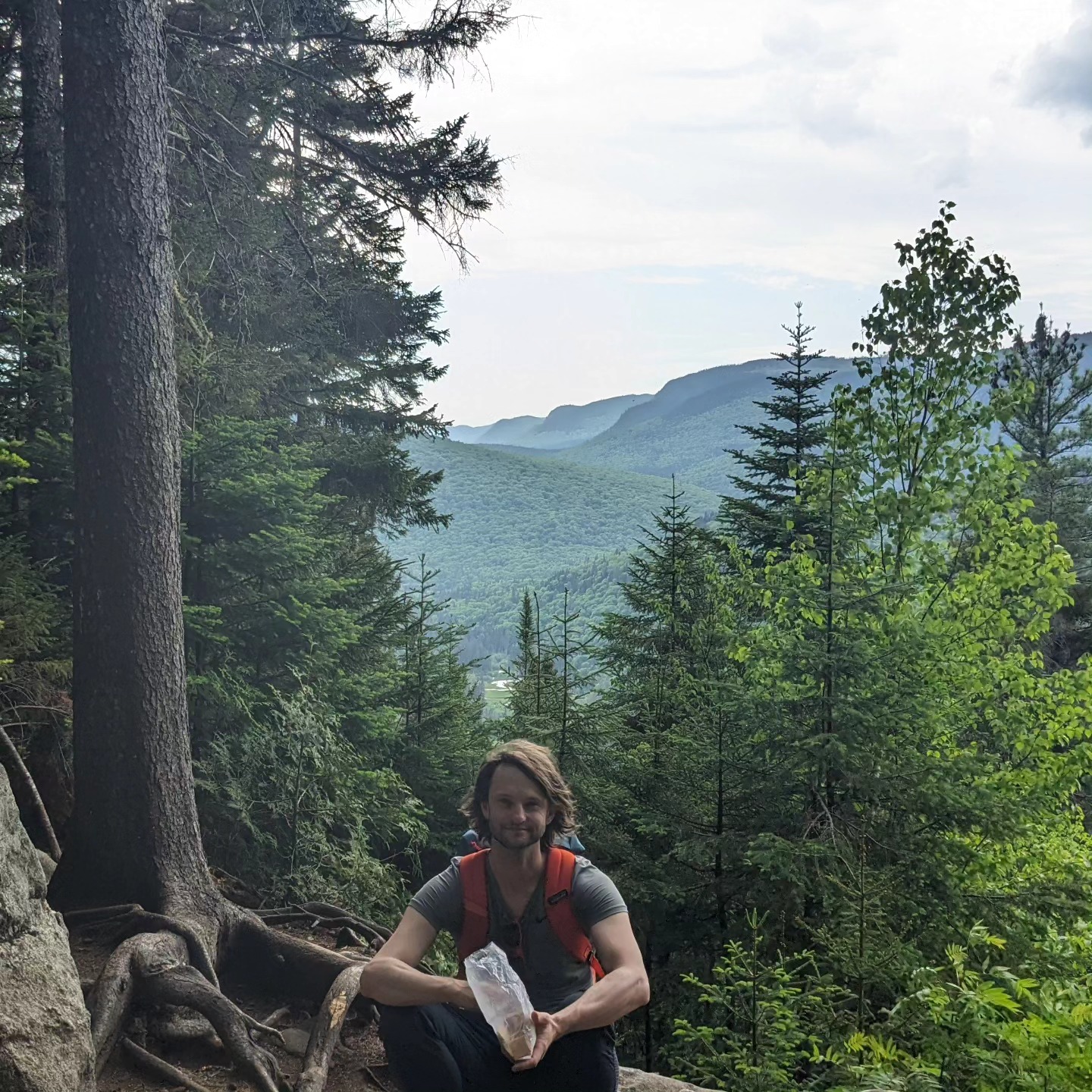
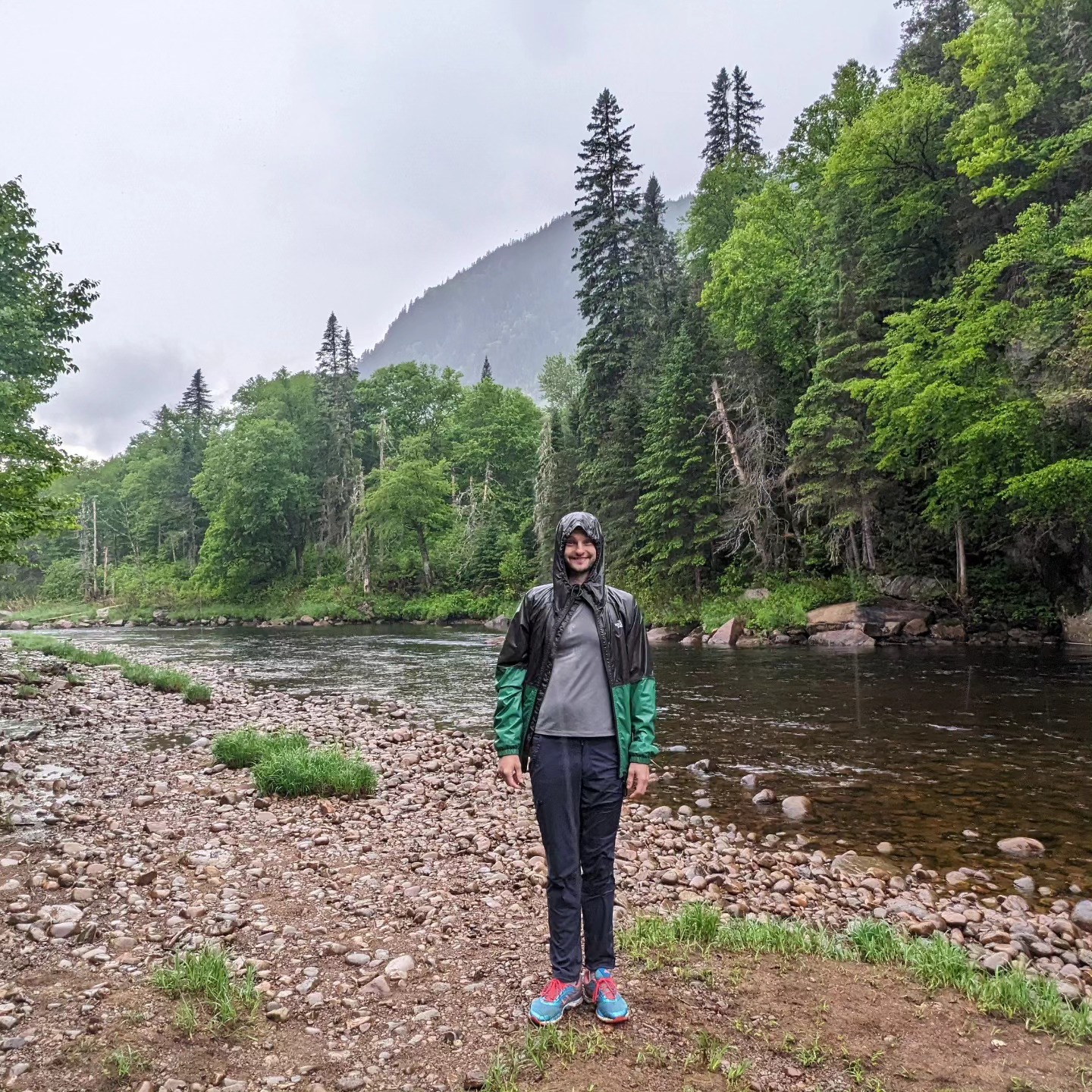
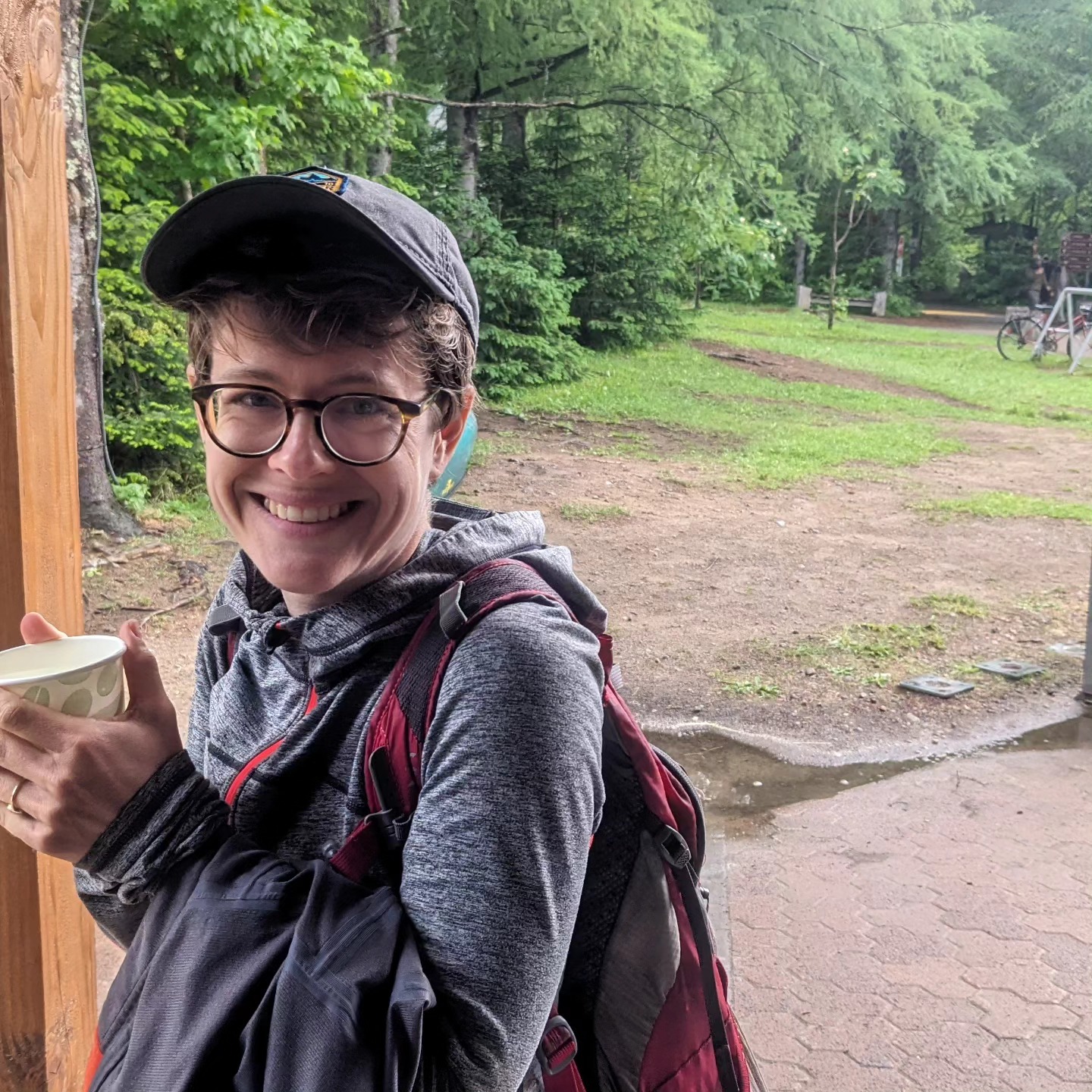
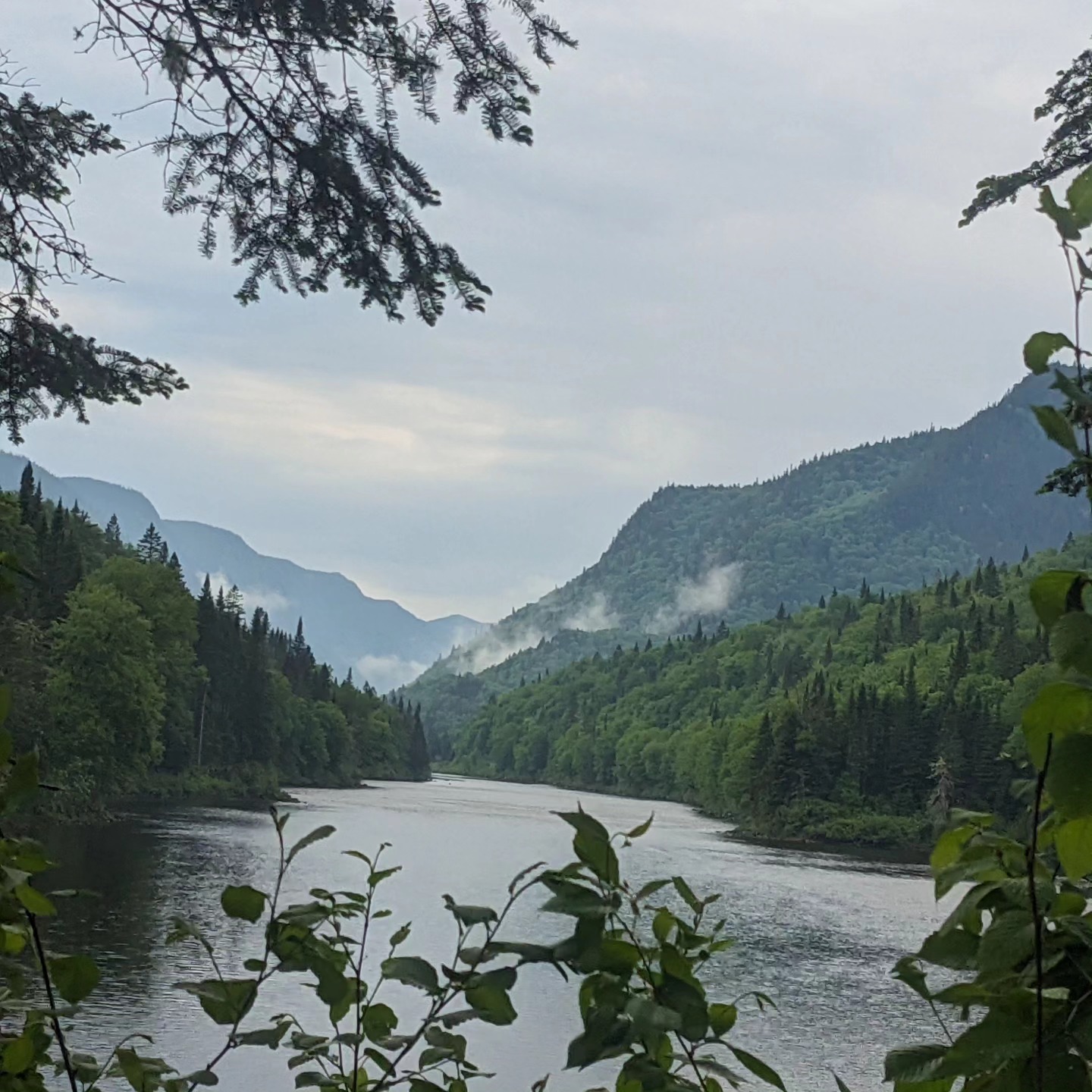
On top of all that, we managed to reach real outdoor wilderness without a car too, which is the part of these trips we’re always secretly the most excited about. We hopped a shuttle from downtown for a 45 minute ride out to Jacques Cartier National Park, 258 square miles of it, river valleys and boreal forest stretching out further than we could see, and did a beautiful 9 mile hike once we got there. What we didn’t fully appreciate until we started researching afterward is just how many more parks sit within easy reach of the city: Montmorency Falls, a waterfall taller than Niagara, just fifteen minutes from Old Quebec, and a whole cluster of others further out toward the Saguenay Fjord and Baie Saint Paul. Jacques Cartier itself apparently has close to 16 miles of river open to kayaking, with everything from calm, easy stretches to real Class III rapids winding between canyon walls. We didn’t have the gear or the time to get on the water this trip, but we’ve already started plotting a version of this same trip built around exactly that. It’s easy to assume that reaching wilderness like this requires a rental car and a parking lot, and it was satisfying every time to prove that assumption wrong.


One more thing about Detroit before we let it go. As funny as the car museum detour was in the moment, it would have been so much more fitting if we could have caught our connection out of the old Michigan Central Station instead. The building has a genuinely great history behind it. It opened in 1913, designed by the same architectural team, Warren and Wetmore along with Reed and Stem, who designed New York’s Grand Central Terminal, which is part of why the two buildings feel like distant cousins. It served over 4,000 passengers a day at its peak in the 1940s, then closed in 1988 after decades of decline and a bad fire the year before, and sat abandoned for more than three decades, stripped and graffitied, one of the most photographed ruins in the country and a fairly on the nose symbol of the city’s broader collapse.
Here’s the part that made us roll our eyes a little, in a complicated way. Ford Motor Company bought the station in 2018 for 90 million dollars and spent six years and over a billion dollars turning it into the centerpiece of a new mobility innovation hub, the kind of place where startups and universities collaborate on the future of transportation. It’s genuinely a beautiful restoration, three thousand skilled tradespeople, over a million and a half hours of work, and it reopened in 2023 and 2024 to a lot of well deserved fanfare. It’s led by Bill Ford Jr., the company’s Executive Chairman and great-grandson of Henry Ford himself, about as clean an example of a nepo baby running the family business as you’ll find in corporate America. There’s something almost too perfect about a train station, left to rot for thirty years in a city that gutted its own transit to make room for cars, getting resurrected by a car company as a shrine to the next generation of cars.
We went looking for an even cleaner version of that irony, some version where the same family that killed the trains also gets to relaunch the station, and the actual history turned out to be messier and honestly more interesting than that. The fun fact we’ve told in an earlier post, that the CEO of GM became Secretary of Defense and helped build the interstates with public money, is about a real person, Charles Erwin Wilson, GM’s president through the 1940s and into the 1950s, tapped by Eisenhower to run the Pentagon right as the Interstate Highway Act was taking shape. He ran GM’s own highway advocacy program before he ever took the Pentagon job, and he’s the one who told a Senate committee that what was good for GM was good for the country. But Wilson has no connection we could find to the Ford family at all. Different company, different bloodline, no tidy generational villain running through both halves of the story. The best honest version is just that the whole auto industry pushed in the same direction for decades, from a few different corporate boardrooms at once, and now one branch of that same industry gets to be the hero restoring the ruin the rest of it helped create.
Trains would probably be cheaper and nicer today if all that public money had gone toward the tracks instead of the roads in the first place. There’s at least some talk of eventually connecting Windsor and Detroit by passenger rail again, so maybe someday we’ll get to ride through that beautiful old station instead of ducking through a gift shop full of hood ornaments to make our train.
What eight months of sustainable travel with an infant has actually looked like, and what we'd tell other parents
Want to learn more and make your travel sustainable? Reach out on our social media or send us an email to let us know your story.